

Attrition Tooth-to-tooth contact
Caused by grinding or clenching (bruxism), often during sleep. Very common in people under stress or those who grind at night.
- → Flattened biting edges
- → Shortened or worn-down teeth
- → Often worsens with stress
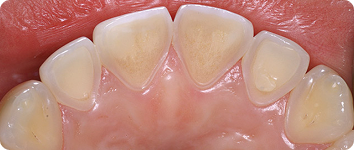
Erosion Acid dissolving enamel
Caused by acidic foods, drinks, acid reflux, or medical conditions. Enamel gradually dissolves, exposing softer dentine beneath.
- → Thinning, translucent enamel
- → "Cupping" on chewing surfaces
- → Yellowing as dentine shows through
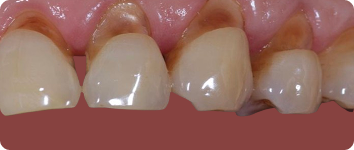
Abrasion Mechanical wear from outside
Most commonly caused by aggressive brushing habits, particularly with a hard-bristled toothbrush. Creates wedge-shaped defects at the gumline.
- → Notches near the gumline
- → Wedge-shaped defects
- → Sensitivity near gum margins

Early Stage Monitoring & Prevention
- ✓ Diet advice to reduce acidic exposure
- ✓ High fluoride toothpaste
- ✓ Night guard if grinding suspected
- ✓ Regular clinical monitoring
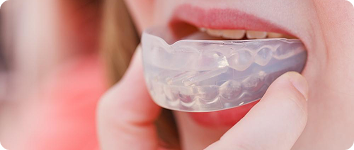
Moderate Stage Protection & Repair
- ✓ Michigan splint or occlusal guard
- ✓ Composite bonding to rebuild teeth
- ✓ Desensitising treatments
- ✓ Managing reflux or underlying causes
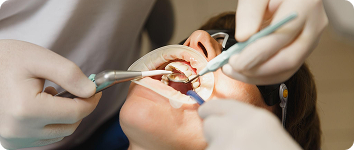
Severe Stage Full Restoration
- ✓ Full mouth rehabilitation
- ✓ Composite or ceramic restorations
- ✓ Restoring lost bite height
- ✓ Advanced occlusal planning